| |
|
Entry Date
|
Nick Name
|
Location
|
|
Thursday, July 09, 2026
|

|
Matt D.
|
Connecticut
|
 |
Entry 20 of 33 |
 |
|
|
|
Shade Netting Color Options
When it comes to shade netting there are three main options. Silver, Black and White.
Silver, often sold under the brand name Aluminet, is highly reflective. This reflectivity can be beneficial for reducing heat load, but it also creates a noticeably bright appearance on sunny days which is something to consider if you have close neighbors or spend significant time near the structure. While effective, silver netting is often reported to have a shorter lifespan compared to black or white materials.
Black shade netting is widely regarded as the industry standard. It absorbs more heat, but when installed above the plants or on a supportive frame, this heat absorption has minimal impact on the crop. Black netting is easy to source, durable, and produces a subtle checkerboard light pattern underneath.
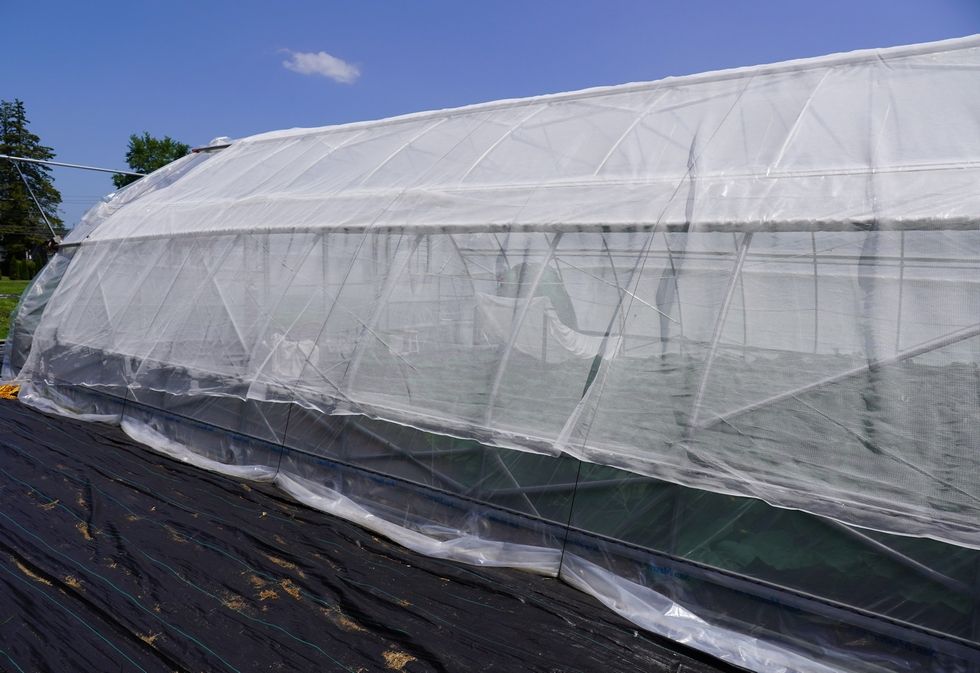
White shade netting creates a diffuse, cloud like light quality. It offers some reflectivity but generally resembles the soft, even illumination produced by standard greenhouse plastic. Many growers appreciate the uniformity of this diffused light.
Having worked with all three options, I would personally select white for its balanced, gentle light distribution. However, plants themselves are largely indifferent to color, it is the shade percentage is the factor that truly matters. Choose the color that best fits your growing environment, aesthetic preferences, and structural setup.
|
|
|